

ESC or click to close
|
Press releases and reports
Use of artificial intelligence by the population of Ukraine
The press release was prepared by Volodymyr Paniotto, the president of KIIS
From February 14 to March 4, 2025, the Kyiv International Institute of Sociology (KIIS) conducted its own all-Ukrainian public opinion survey "Omnibus", to which, on its own initiative, added a question about artificial intelligence. By the method of telephone interviews(computer-assistedtelephoneinterviews, CATI) based on a random sample of mobile phone numbers (with random generation of phone numbers and subsequent statistical weighting) in all regions of Ukraine (the territory controlled by the Government of Ukraine), 1,029 respondents were surveyed. The survey was conducted with adult (aged 18 and older) citizens of Ukraine who, at the time of the survey, lived in the territory of Ukraine controlled by the Government of Ukraine. The sample did not include residents of territories temporarily not controlled by the Ukrainian authorities (at the same time, some of the respondents are IDPs who moved from the occupied territories), and the survey was not conducted with citizens who left abroad after February 24, 2022. Formally, under normal circumstances, the statistical error of such a sample (with a probability of 0.95 and taking into account the design effect of 1.3) did not exceed 4.1% for indicators close to 50%, 3.5% for indicators close to 25%, 2.5% for indicators close to 10%, 1.8% for indicators close to 5%. Under the conditions of war, in addition to the specified formal error, a certain systematic deviation is added. Factors that may affect the quality of results in "wartime" conditions were previously cited by KIIS. In general, we believe that the obtained results are still highly representative and allow a fairly reliable analysis of the public moods of the population.
Experience and frequency of using artificial intelligence
The use of artificial intelligence in modern society is not just important, but critically necessary for the development of technology, economy and social processes. Artificial intelligence (AI) opens up new horizons in science, medicine, education, business, public administration, etc., contributing to increasing efficiency, accuracy and productivity in various areas. The degree of use of AI can be one of the indicators of the potential of a modern state. Given the importance and potential of AI, we decided to conduct a research on its use by the population of Ukraine. Below are the results of this research (see graph 1).
Graph 1. Artificial intelligence (AI) technologies are currently being actively developed. Do you personally use Artificial Intelligence for work or for your own needs?
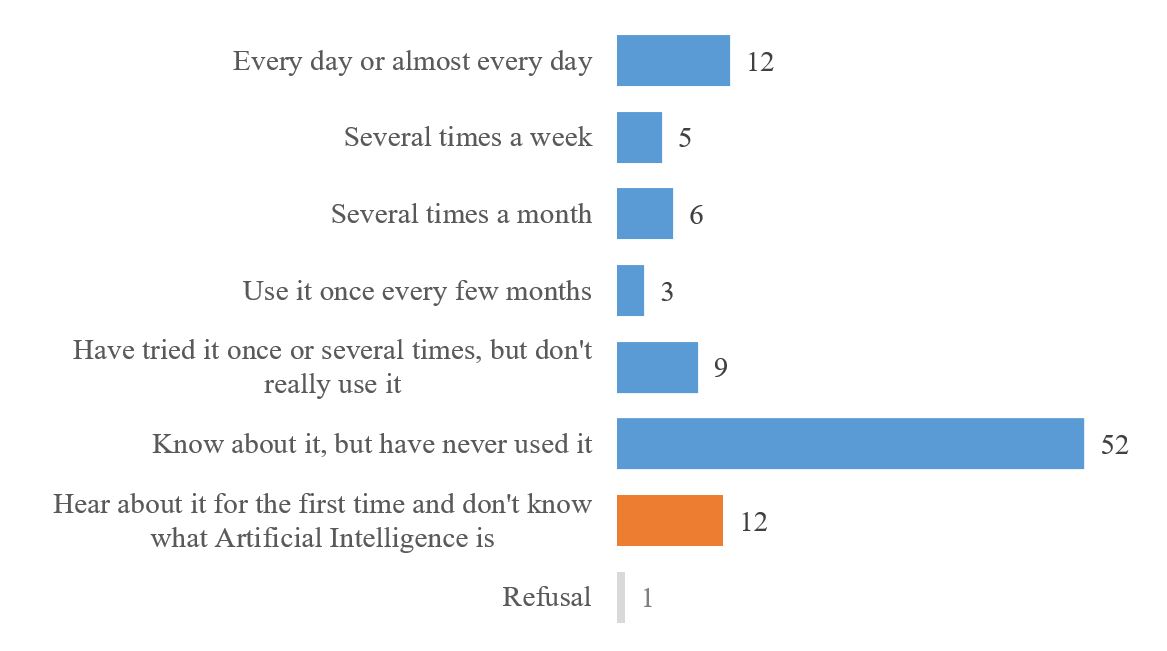
The results of the research demonstrate that despite the active development of AI-based technologies, their actual use among Ukrainians remains limited. 64% of the population does not use AI at all, of which:
Another 9% of respondents tried using AI, but did not implement it in their daily lives. Only 26% of respondents have experience in practical use of AI, of which:
These figures indicate a high level of awareness of AI (88%), but at the same time a significant gap between knowledge and practice. Only one in eight Ukrainians has actively integrated AI into their daily lives, and the share of regular users (at least once a week) is 17%.
|
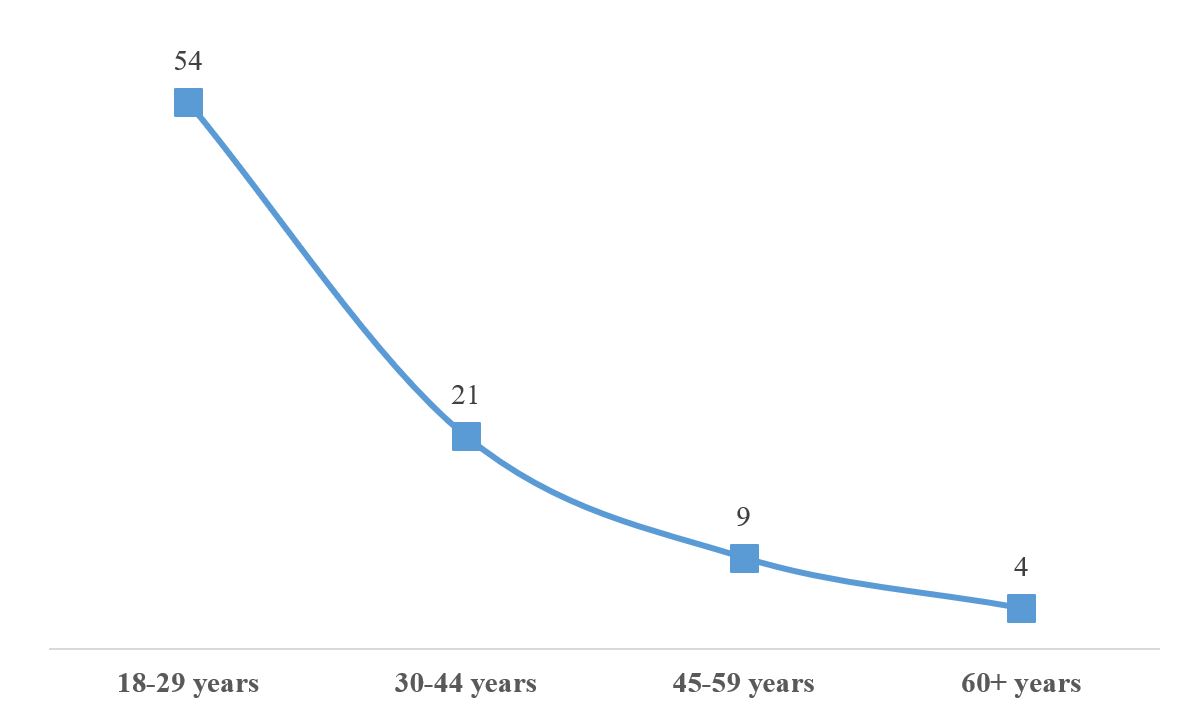
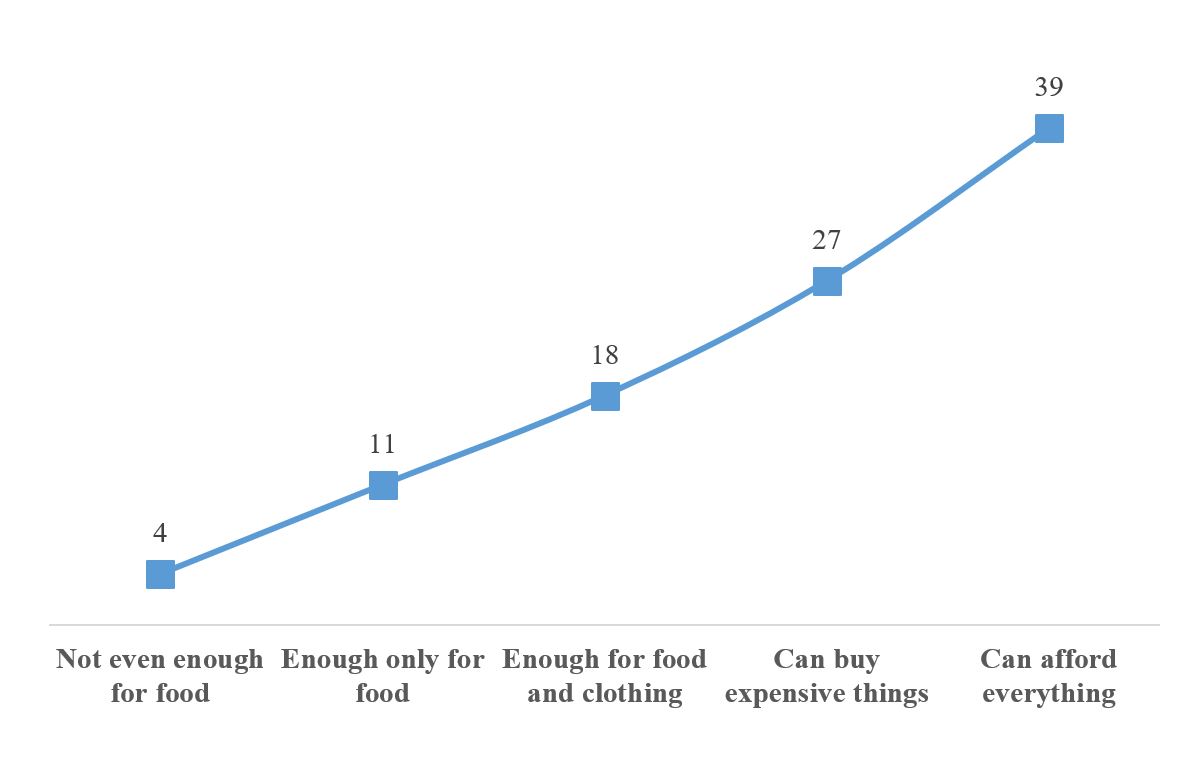
| Ukraine | Russia | |
| Regularly | 17% | 6% |
| Sometimes | 9% | 11% |
| Not now, but I know about this possibility | 61% | 43% |
| I'm hearing about it for the first time | 12% | 41% |
As we see, in Ukraine there are significantly more regular users (17% compared to 6%) and much fewer who have not heard of AI (12% compared to 41%). We must constantly increase this difference - this is the key to technological dominance.
In order to make up for lost time and ensure a stable future, Ukraine must focus on digitalization and integration of modern technologies into all spheres of life. It is important to actively support the development of AI in Ukraine by investing in relevant research and development, as well as implementing training and advanced training programs for the population.
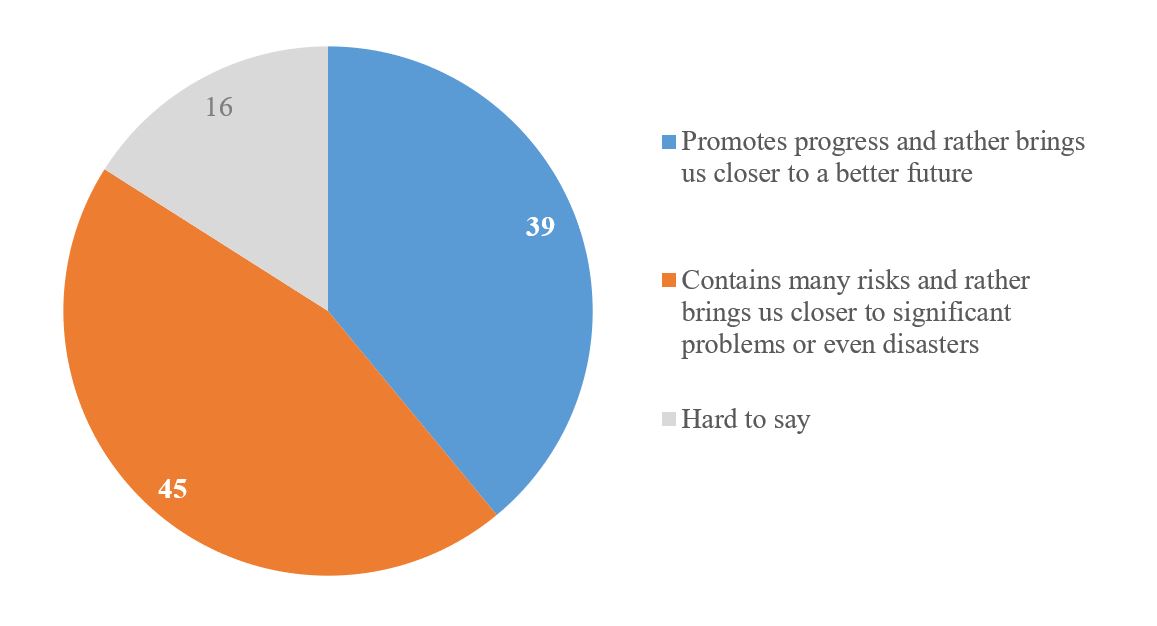
At the same time, it is necessary to take into account that new technologies, in particular AI, bring not only benefits, but also significant challenges. The use of AI can replace many professions, and if society does not provide alternative ways of employment and retraining, this can lead to increased unemployment, social tension and increased inequality. Therefore, the implementation of AI should take into account the principles of harmonious development, social responsibility and preventing a new gap between the ultra-rich technological elites and the rest of society.
[2] Levada Center: Use of the Internet, social networks, messengers, artificial intelligence and other online services: March 2025// https://www.levada.ru/2025/04/24/polzovanie-internetom-sotsialnymi-setyami-messendzherami-iskusstvennym-intellektom-i-drugimi-onlajn-servisami-mart-2025/
[3] To compare, we considered that regularly is several times a week or more often, sometimes is several times a month or once every few months, not now, but I know about such an opportunity - know it or have tried it, but do not use it, and I hear about it for the first time - it coincides.
Our social media:
 KIIS page
 KIIS channel